| Poglej prejšnjo temo :: Poglej naslednjo temo |
| Avtor |
Sporočilo |
vintagesonic
Pridružen/-a: Sre Mar 2010 17:24
Prispevkov: 1437
Kraj: Ljubljana
|
 Objavljeno: Čet Sep 05, 2013 10:42 Naslov sporočila: Objavljeno: Čet Sep 05, 2013 10:42 Naslov sporočila: |
 |
|
Oprostite da negovorim slovenski jezik, samo malo hrvatski.
No problem at all. Although this is much more HI FI/ HI-End forum than Pro audio, you are welcome, too.
A bit surprise, but nice/good surpise.
1. Maggies can be and are used in professional studios. For a mastering studio, where we want ideal reproduction, they work very well. We've tried many alternatives, PMC, ATC, Quested, B&W and prefer these. At some point it becomes a personal preference, as long as they let you do your work. These do, and are both honest, detailed and revealing. There are a few places in the UK and US that also use them, most notably Barry Diament: www.barrydiamentaudio.com. Last I spoke with him, he had upgraded to the new 3.7s. We may do the same at some point, but these are paid for and work quite well.
And as you can see, they are ruler flat
I totally agree with your statement but you have to admit “Maggies” are not standardised (or let’s say rarely seen) equipment in other recording or mastering studios. That’s the fact. Do you agree?
2. The studio has been constructed in an existing building from the late 1800's. So we have to work within the confines of the existing structure. It's not an office, but the top floor of the building. The acoustics are excellent, and were done by Thomas Jouanjean of Northward Acoustics:www.northwardacoustics.com. Thomas is a good friend and does excellent work. We were lucky enough to hire him before he became famous, lol. Check out Amsterdam Mastering for a ground-up complete build. He uses the exact same principles and techniques, but wasn't hampered by having to preserve the existing structure.
I will be in Amsterdam at the end of the next week on the IBC so there is a chance to visit or see this place.
3. Don't be deceived by the picture. The construction uses a wide range of different techniques to ensure a flat and even response throughout the room, and the speakers are supposed to be close to the wall. The wall is designed to deal with the speaker's rear lobe (they are dipoles - meaning they produce the same sound wave from the rear, but in opposite polarity to the front) as well as provide support at certain frequencies. The wall is transparent at lower frequencies, the bass goes through and out the walls and stays out.
The report was done on the basis of some personal experiences in studio design construction and your photography. The first impression is the same as it was described in the text. My personal feeling is/was the place looks as it was in use for some other activities not for studio or mastering applications. The construction rules and principles of music recording studios (particular control rooms) are far away from standards you were implemented in your project. This is my personal impression related what I have seen on the photo. Situation on site could be of course a bit different.
4. The speakers are flat down to 34Hz, we have a JL Audio Fathom sub taking care of the bottom end and .1 for 5.1. We've measured it's response down to 18Hz, which is more than respectable. All are time aligned at the listening position. It sounds *amazing*, regardless of what you might try and guess by looking at a picture.
Combination of separate sub speaker with "Maggies" is not always the winning combination, but I am sure you made the best choice for your space.
In case you are mastering 5.1 projects how you define/control the sound of LFE channel? Is the acoustic treatment of the room, particular on LF side adequate to hear precise and define sub frequencies down to 18 Hz? The distance between front speakers and front wall is also from my point of view a bit too short, regarding to dipole speakers you have mentioned before, but this is just my pure speculation.
5. I'm not sure what you wrote about the ceiling cloud, but it is indeed filled with a special type of insulation. Not rockwool . We have about 800kg of insulation in the room itself, not counting other special techniques and materials used by the acoustician that also help make the room sound as good as it does.
I presume ceiling construction should be full of acoustic damping material. Rock wool, mineral wool, barafoam, whatever….Other parts/details of acoustic treatment of the room are not visible on the photo, so it is hard to judge. Of course, I made again pure speculation.
6. I've been doing this for over 10 years professionally. I'm very pleased with the room and how it sounds, and our work has never been better. Whatever anyone may think of our choice of speakers, it's simply our choice. You have to choose the tools that work best for you, not what other people think is "best". Having been in some of the top mastering rooms in Europe and the US, I'm pretty confident that we have a room at the upper end of the market. There are better rooms, f.x. at Sterling in NY, Metropolis in the UK, etc, but there are a whole lot of worse sounding ones. A friend of mine in NY works in a glass office cubicle (or did, he recently moved) that for anyone else would be insane, but the long row of gold and platinum records along the wall would indicate that it works fine for him!
I agree with your personal impression/statement, particularly when you have stressed out the fact that it was your personal decision to use such system in your studio, but on the other hand you have to admit, your control room is not standard approach to the design of mastering studios worldwide. I have also seen some other ones worldwide (including ex Metropolis) and every studio has its own and unique story, but there are still some common points in design.
Using glass in studios is not insane but the design of such space has to be very carefully calculated on the basis of some previous successful projects and standardised rules of studio/Control Room acoustics otherwise could be a nightmare for end users (mastering engineers). I visited the studio of Kate Bush ( by accident  ) where main studio monitors were installed in a separation wall full of glass, but it was designed by very well know worldwide acoustician with a lot of personal experience. It was not done just for fun to impress visitors. ) where main studio monitors were installed in a separation wall full of glass, but it was designed by very well know worldwide acoustician with a lot of personal experience. It was not done just for fun to impress visitors.
Good coffee is hard to find here, it all tastes pretty horrible. So we pride ourselves on offering our customers something drinkable
Good coffe at right time, on the right place, surrounding by nice company is sometimes the most important detail in such business.
8. Anyone in the area is more than welcome to come by and visit and have a listen. We're pretty proud of the way things sound and like to share our love of all things audio with anyone with the time to spare
In case there will be opportunity to visit you it will be my pleasure and privilege to see your studio. Thanks for invitation.
Thanks for mentioning us, have a great day!
Same to you, have a great day and a lot of success with your work.
Best regards,
Thor Legvold
Sonovo mastering
Stavanger, Norway
Vintagesonic – At the end, no hard feelings, please |
|
| Nazaj na vrh |
|
 |
Sonovo
Pridružen/-a: Čet Sep 2013 8:31
Prispevkov: 4
Kraj: Norveška
|
| Objavljeno: Čet Sep 05, 2013 21:05 Naslov sporočila: |
|
|
| vintagesonic je napisal/a: | Oprostite da negovorim slovenski jezik, samo malo hrvatski.
No problem at all. Although this is much more HI FI/ HI-End forum than Pro audio, you are welcome, too.
A bit surprise, but nice/good surpise.
1. Maggies can be and are used in professional studios.
I totally agree with your statement but you have to admit “Maggies” are not standardised (or let’s say rarely seen) equipment in other recording or mastering studios. That’s the fact. Do you agree? |
Two comments. 1. - recording and mastering studios are two different things, with quite different requirements. 2. While there are popular speakers for recording/mixing (Genelec, Dynaudio, PMC, ATC, Klein & Hummell, etc etc), when it comes to mastering monitors, tastes are much broader and there is no industry standard. At that level it's a question of taste, and what the engineer likes and wants to use.
| vintagesonic je napisal/a: | 2. We have had to work within the confines of the existing structure. Check out Amsterdam Mastering for a ground-up complete build.
I will be in Amsterdam at the end of the next week on the IBC so there is a chance to visit or see this place. |
I think you'll be amazed at what you hear. Or rather, what you don't
Say hi to Darius from me!
| vintagesonic je napisal/a: | 3. Don't be deceived by the picture.
The report was done on the basis of some personal experiences in studio design construction and your photography. The first impression is the same as it was described in the text. My personal feeling is/was the place looks as it was in use for some other activities not for studio or mastering applications. The construction rules and principles of music recording studios (particular control rooms) are far away from standards you were implemented in your project. This is my personal impression related what I have seen on the photo. Situation on site could be of course a bit different. |
Thomas uses the same basic approach to all of his designs. I'm not sure what other activities you refer to, but we wanted to preserve as much natural light as possible. So building a wall across the windows was out. Thus the absorbers. I'm not sure what "some personal experience" means, but Thomas has been doing this professionally for some time, and has a long list of world class rooms on his resume. You may not like how it looks, but I can assure you it sounds great. Mastering engineers aren't usually willing to put up with anything less than perfect when it comes to acoustics and monitoring, but like I said earlier, at this level it comes down to personal taste.
There was a period when Lipinski monitors were well liked, B&W before that, ATC and PMC have been used a lot as well. Some of the people I know in the US use Dynaudio, or Revel, and I've heard a pair of Eggleston works that were amazing. I don't recall if it was Telarc or an English label (Decca?) that used Electrostatics for their mixing and mastering. Magnepans and other similar speakers have also been used by some pretty famous mastering engineers before. They may not be the most common, but are by no means "unusual" ethers.
| vintagesonic je napisal/a: | 4. A JL Audio Fathom sub takes care of the bottom end and .1 for 5.1.
Combination of separate sub speaker with "Maggies" is not always the winning combination, but I am sure you made the best choice for your space. |
Sealed subs are a must with Maggies, due to their transient response and overall quickness. We auditioned several brands before settling for JL Audio. The transition from panels to sub is seamless.
I considered getting the 20's instead of the 3.6QRs, they offer response down to 20Hz and are push/pull design, but they ended up too big for the room. Also, for 5.1 we needed a .1 sub, and the JL Audio is really an incredible sub for the money. Very precise, no overhang, super long throw, it plays the notes cleanly with no distortion or other problems.
| vintagesonic je napisal/a: | | In case you are mastering 5.1 projects how you define/control the sound of LFE channel? Is the acoustic treatment of the room, particular on LF side adequate to hear precise and define sub frequencies down to 18 Hz? The distance between front speakers and front wall is also from my point of view a bit too short, regarding to dipole speakers you have mentioned before, but this is just my pure speculation. |
Yes, the room is accurate enough to reveal notes down to 18Hz. Although at 18Hz you have something that sounds more like a motorboat than music . Distance is calculated from listening position, as I said the front wall is partially acoustically transparent and speakers are designed to stand there. It's all been taken into consideration 
| vintagesonic je napisal/a: | 5. I'm not sure what you wrote about the ceiling cloud, but it is indeed filled with a special type of insulation. Not rockwool . We have about 800kg of insulation in the room itself, not counting other special techniques and materials used by the acoustician that also help make the room sound as good as it does.
I presume ceiling construction should be full of acoustic damping material. Rock wool, mineral wool, barafoam, whatever….Other parts/details of acoustic treatment of the room are not visible on the photo, so it is hard to judge. Of course, I made again pure speculation. |
There is a damping material that has a different absorption curve than rockwool/mineral wool and is much more dense. Most of the acoustic treatment is hidden by the wall covering. F.x. the walls are 4 layers of various materials in specific relation to one another.
| vintagesonic je napisal/a: | 6. I'm very pleased with the room and how it sounds, and our work has never been better. Whatever anyone may think of our choice of speakers, it's simply our choice.
I agree with your personal impression/statement, particularly when you have stressed out the fact that it was your personal decision to use such system in your studio, but on the other hand you have to admit, your control room is not standard approach to the design of mastering studios worldwide. I have also seen some other ones worldwide (including ex Metropolis) and every studio has its own and unique story, but there are still some common points in design. |
I really don't understand what you mean by non standard approach. There isn't any common standard approach to mastering studio design worldwide. Really. We've been in contact with several acousticians, including George Ausperger, and everyone has their own approach and way of solving problems. The common point of design is that it should be as neutral and quiet as possible, and allow the monitoring system to reveal exactly what is in the mix. No more, no less.
| vintagesonic je napisal/a: | | Using glass in studios is not insane but the design of such space has to be very carefully calculated on the basis of some previous successful projects and standardised rules of studio/Control Room acoustics otherwise could be a nightmare for end users (mastering engineers). I visited the studio of Kate Bush ( by accident ) where main studio monitors were installed in a separation wall full of glass, but it was designed by very well know worldwide acoustician with a lot of personal experience. It was not done just for fun to impress visitors. |
It wasn't designed as a studio. It was in fact an office cubicle, but he managed to make it work (to his credit as an engineer). I think you're leaning too heavily on the idea that there is some standard in the industry. There isn't, besides Everst's book of acoustics and the underlying physics. Those haven't changed, but there are many, many ways to design and build a room, and no one "right" way to do it. There are however many more "wrong" ways than right!
| vintagesonic je napisal/a: | Good coffee is hard to find here, it all tastes pretty horrible. So we pride ourselves on offering our customers something drinkable
Good coffe at right time, on the right place, surrounding by nice company is sometimes the most important detail in such business. |
I agree 100%
| vintagesonic je napisal/a: | 8. Anyone in the area is more than welcome to come by and visit and have a listen. We're pretty proud of the way things sound and like to share our love of all things audio with anyone with the time to spare
In case there will be opportunity to visit you it will be my pleasure and privilege to see your studio. Thanks for invitation. |
Anytime, we always have time for anyone who loves music! That's what it's all about, in the end.
| vintagesonic je napisal/a: | Thanks for mentioning us, have a great day!
Same to you, have a great day and a lot of success with your work.
Best regards,
Thor Legvold
Sonovo mastering
Stavanger, Norway
Vintagesonic – At the end, no hard feelings, please |
Cheers (pozdrav!),
Thor |
|
| Nazaj na vrh |
|
|
CASTOR
Pridružen/-a: Pet Okt 2008 16:18
Prispevkov: 1087
Kraj: KOZINA
|
| Objavljeno: Pet Sep 06, 2013 01:12 Naslov sporočila: |
|
|
Thank you Thor, very pleased.
Best regards
Tom |
|
| Nazaj na vrh |
|
|
NLP
Pridružen/-a: Tor Nov 2009 10:01
Prispevkov: 1035
Kraj: Drugje
|
| Objavljeno: Pet Sep 06, 2013 01:30 Naslov sporočila: |
|
|
Sonovo,
your listening environment is not FTB design, preferred by Thomas?
Which acoustic design he "used" and why?
Cheers,
NP
_________________
Nenad P. |
|
| Nazaj na vrh |
|
|
Sonovo
Pridružen/-a: Čet Sep 2013 8:31
Prispevkov: 4
Kraj: Norveška
|
| Objavljeno: Pon Sep 09, 2013 07:35 Naslov sporočila: |
|
|
| NLP je napisal/a: | Sonovo,
your listening environment is not FTB design, preferred by Thomas?
Which acoustic design he "used" and why?
Cheers,
NP |
Hi Nenad,
as far as he's explained it to me, yes, it is a FTB design. One of our requirements was 5.1, and I'm not sure how this figures into his designs, but in essence the room is transparent to the speakers, and the room behind the rear wall functions as a huge bass trap. He normally prefers to soffit mount the speakers in the walls, but has done several designs (especially mastering studios) where the speakers can be placed in the room itself.
Best regards,
Thor |
|
| Nazaj na vrh |
|
|
vintagesonic
Pridružen/-a: Sre Mar 2010 17:24
Prispevkov: 1437
Kraj: Ljubljana
|
| Objavljeno: Pon Sep 09, 2013 10:27 Naslov sporočila: |
|
|
| Sonovo je napisal/a: | | Two comments. 1. - recording and mastering studios are two different things, with quite different requirements. 2. While there are popular speakers for recording/mixing (Genelec, Dynaudio, PMC, ATC, Klein & Hummell, etc etc), when it comes to mastering monitors, tastes are much broader and there is no industry standard. At that level it's a question of taste, and what the engineer likes and wants to use. |
HI Thor again
We can make a common conclusion as you have mentioned.
1. Recording and mastering studios are two different things, with quite different requirements.
2. Mastering studios come down much more to personal taste than music recording control rooms.
In general my personal opinion is that mastering studios should be just an “extensions” of the control rooms, because otherwise you can’t simulate the sound of control room (where the original music material was recorded/mixed) in mastering room area if sonic criteria is totally different.
For that reason I discuss about some common standards related to acoustics treatment of the working space in terms of recording/mixing and mastering activities.
Some mastering engineers/studios have a bit different (opposite) opinion. From their point of view mastering room should "behave" much more like listening room at home. I can accept also such alternative approach to the acoustic design of the room, but on the other hand I have to admit I am a bit sceptical. But as you said before it is the matter of personal taste.
Maybe a bit Off topic related to the “standardisation” of sound quality:
The fact is that nowadays mastering studios produce “massive problems” related to so call “loudness war” in terms of loudness normalisation. It seems the situation will be a bit better in the near future, when there will be some new standards/meters for music production. Lately they have started with some audio quality standards for broadcasters.
http://tech.ebu.ch/docs/events/ibc11-ebutechnical/presentations/ibc11_10things_r128.pdf
The logical result will be the use of new loudness meters, instead old fashioned digital PPM meters for final music production. With such meters you can achieve better and sonically much more correct music material.
Last few years we have found some CD productions on the market which were sonically on the edge reasonable sound criteria and for my personal feeling totally out of sense. You can find such projects much more in so called “modern music” production ( pop, rock jazz ), but sometimes even on the field of classical recordings. It seems the pressure from music and film production houses was obvious too heavy/strong.
Regards
Vintagesonic
Nazadnje urejal/a vintagesonic Pon Sep 09, 2013 11:57; skupaj popravljeno 1 krat |
|
| Nazaj na vrh |
|
|
NLP
Pridružen/-a: Tor Nov 2009 10:01
Prispevkov: 1035
Kraj: Drugje
|
| Objavljeno: Pon Sep 09, 2013 10:35 Naslov sporočila: |
|
|
Thanks.
Posted picture of your listening room on your website confused me.
I do not see diffusors "above" sweet spot?
(and behind - http://www.sonovo.no/About_us/ - here they are:))
... maybe that is not the same room?
From the image is also unclear the present of the steel membrane (which is supposed to simulate the soffit mounting, like in Amsterdam mastering for example).
... soffit is not desirable in mastering studios, very few have... but that is another story.
_________________
Nenad P. |
|
| Nazaj na vrh |
|
|
Sonovo
Pridružen/-a: Čet Sep 2013 8:31
Prispevkov: 4
Kraj: Norveška
|
| Objavljeno: Pon Sep 09, 2013 23:01 Naslov sporočila: |
|
|
Hi guys,
thanks for the replies.
There are no diffusors above the listening position. I asked about them, and was told in my room they weren't necessary. Each room is calculated and tuned individually, mine needed them on the rear wall only.
I'm not sure what you mean by "steel membrane". Darius has a thin sheet of stainless steel covering on his front wall for aesthetic reasons, but it's not related to the audio, as far as I know. You'll notice that the geometry of the front wall is pretty much the same, and there is in fact a steel framework behind it. This I think is pretty common in all of Thomas' designs.
I'd agree with you as far as soffit mounting goes.
Mastering studios need to reproduce exactly - and only - what is on the master tape/digital file. I.e. the mix, the whole mix, and nothing but the mix. I've heard the "like a living room, but better" argument but don't agree with it myself. It should be an audiophile's dream , not euphonic, but accurate. Focus is on listening, not processing. Although processing needs to be done it's nowhere near as extensive or abusive as it can be in mixing.
Our goal is to produce a master that really connects with the listener at an emotional/intuitive level, while being technically as good as possible, and also translating to a wide variety of systems. I want it to sound pretty much the same on a laptop, headphones, small living room hi fi, audiophile system and club system. Obviously it will never be the same everywhere, but the differences should be due to the playback system, the master should sound consistent across systems.
I also agree (very much so!) that loudness wars have really messed up a lot and have for years. R128 is a step in the right direction, but applies only to the broadcast world (to avoid commercials blasting you out of your seat while watching some other show). Hollywood has had, and followed standards for movies that slowly are also being eroded, unfortunately, but still offers lifelike dynamics and headroom on most productions. I doubt that a standard for CD would help, and isn't the CD dead anyway?
What you wrote about meters is partially true. PPM aren't "old fashioned" really, but came with the advent of digital and the importance of not clipping (going over 0dB Full Scale). The problem was that people replaced their VU meters (which are "old fashioned") with PPM. PPM tells you about peak levels, which say *nothing* about loudness. While VU isn't the greatest for that either, they tell us a lot more about average loudness (which is what we hear) than PPM does. Today there are a lot more metering standards and systems available, my personal favorites being the TC Electronics LM6: www.tcelectronic.com/lm6-plug-in/ and the RTW meters: www.rtw.de/en/products/audio-monitors/touchmonitor-tm9.html
For a good quick overview, in a plugin, you could also try the TT Dynamic Range meter. We use it all the time: www.dynamicrange.de/es/es/download
Cheers,
Thor |
|
| Nazaj na vrh |
|
|
NLP
Pridružen/-a: Tor Nov 2009 10:01
Prispevkov: 1035
Kraj: Drugje
|
| Objavljeno: Tor Sep 10, 2013 00:20 Naslov sporočila: |
|
|
... hmmm ok:
http://prorecordingworkshop.lefora.com/2011/11/03/front-to-back-acoustic-technique/
Strategical position of diffusors are important orientation in room for engineer.
... on GS you can read about a function of steel membrane, it is not only for aesthetic reasons.
Anyway... I think that he gradually upgrade his idea about FTB over years and experiences...
Nowdays in whatever high end mix/mastering etc. design... we find blurring decisions about designs - mix and mastering spaces etc. + with "recently new" psichoacoustical studies about "critical" listening rooms can see very similar solutions... + personal taste...
_________________
Nenad P. |
|
| Nazaj na vrh |
|
|
Northward
Pridružen/-a: Tor Sep 2013 22:41
Prispevkov: 2
Kraj: Brussels, Belgium
|
| Objavljeno: Tor Sep 10, 2013 23:28 Naslov sporočila: |
|
|
[quote="NLP"] ... hmmm ok:
http://prorecordingworkshop.lefora.com/2011/11/03/front-to-back-acoustic-technique/
Strategical position of diffusors are important orientation in room for engineer.
... on GS you can read about a function of steel membrane, it is not only for aesthetic reasons.
Anyway... I think that he gradually upgrade his idea about FTB over years and experiences...
Nowdays in whatever high end mix/mastering etc. design... we find blurring decisions about designs - mix and mastering spaces etc. + with "recently new" psichoacoustical studies about "critical" listening rooms can see very similar solutions... + personal taste... [/quote]
The joys of Google alerts!
Sonovo was indeed designed "on the way to FTB", within the constraints of the existing room as Thor explained. Its design predates Amsterdam Mastering, which is the first official FTB room to definitive standard (for those within my company it is called a "REV2 FTB". So a room to final standard. All rooms before Amsterdam Mastering are either FTB REV0 - only 2 were made - or FTB REV1 of which about 10 were made.) For example, Euphonic Masters is a REV1. At that time we were still ironing out some variables and cross referencing data.
Amsterdam Mastering was the project that made FTB an official and finalized standard.
A noticeable difference is that not all REV0 and REV1 rooms are Non-Environment-like rooms, speaker to room wise. There are some left overs of the RFZ idea in a couple of them, maybe 3. Which were definitely ruled out with REV2, which are all complete N-E speaker to room.
The steel at Amsterdam Mastering is purely for aesthetics but was integrated to the front wall system. The wall behind is rather complex and functions within what we call a "quasi minimum phase" or "quasi flush mount" front wall assembly.
FTB REV2 (which is called only FTB now) has a very clear set of benchmarks to attain, there are '0' grey areas. It's all very clear, the standard is very strict. All FTB rooms designed after mid/end 2008 and built from 2009 are to REV2, so to definitive standard.
It is only natural that it takes a few years to finalize a design concept and test it properly. It took me 5 years of work to get to REV2.
Sonovo is unique because of the use of the Magnepans which was an interesting brand/system to work with. The response of the studio is to high standard. We give a guarantee on results on our work (so, Frequency response, ETC response etc). So, no bad surprises with the end result.
Hope it clear up a few things.
Be well, |
|
| Nazaj na vrh |
|
|
NLP
Pridružen/-a: Tor Nov 2009 10:01
Prispevkov: 1035
Kraj: Drugje
|
| Objavljeno: Sre Sep 11, 2013 09:54 Naslov sporočila: |
|
|
Hi Thomas,
thanks for informations.
So I was right:"Anyway... I think that he gradually upgrade his idea about FTB over years and experiences... "
Keep up the good work and hope to see REV3 etc.
_________________
Nenad P. |
|
| Nazaj na vrh |
|
|
Northward
Pridružen/-a: Tor Sep 2013 22:41
Prispevkov: 2
Kraj: Brussels, Belgium
|
| Objavljeno: Sre Sep 11, 2013 13:29 Naslov sporočila: |
|
|
[quote="NLP"]Hi Thomas,
thanks for informations.
So I was right:"Anyway... I think that he gradually upgrade his idea about FTB over years and experiences... "
Keep up the good work and hope to see REV3 etc.[/quote]
Thanks. We're trying to!
You are right indeed. It was a process - it can only be a process.
There won't be a REV3. At least I don't see how it could happen.
We are refining the way to build some small things here and there, but the concept and benchmarks will stay the same for the foreseeable future.
So progress is mainly on little things that makes the studios easier to build, or in innovations withing the FTB standard like the glass front wall wiht speakers in-glass, main speakers decoupling systems, optimized membranes etc.
So, innovations on the practical side of things or various aesthetic "options" side of things. We're also working on acoustically optimized studio furniture, with a series specially made and optimized for FTB rooms.
We'll see where this goes
Be well, |
|
| Nazaj na vrh |
|
|
NLP
Pridružen/-a: Tor Nov 2009 10:01
Prispevkov: 1035
Kraj: Drugje
|
| Objavljeno: Čet Sep 12, 2013 00:16 Naslov sporočila: |
|
|
Indeed!!!
_________________
Nenad P. |
|
| Nazaj na vrh |
|
|
ajka
Pridružen/-a: Tor Maj 2008 10:00
Prispevkov: 3193
Kraj: Sežana
|
| Objavljeno: Sre Mar 26, 2014 14:51 Naslov sporočila: |
|
|
LP
"Ni vse zlato kar se sveti spredaj", če je zadaj "ceneno"...
Kot je poznavalcem znano gre za absolutno hi-end špico, če ne drugo v ceni sigurno. Jih najdemo tako "doma" kot v "studiu" ...
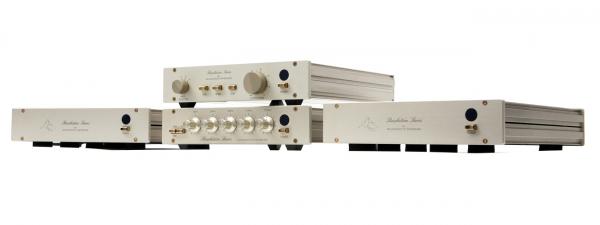
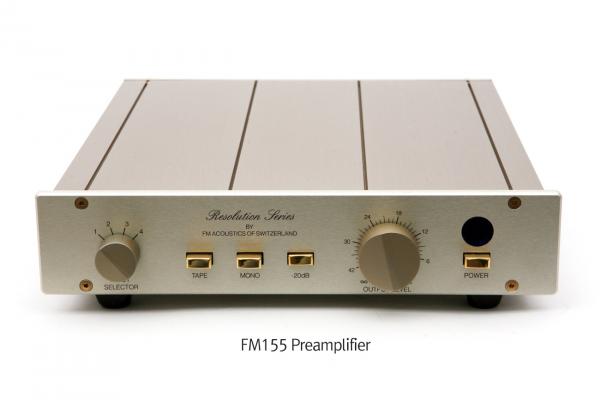
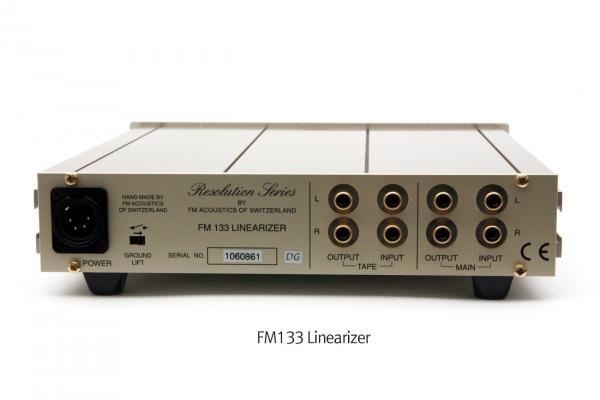

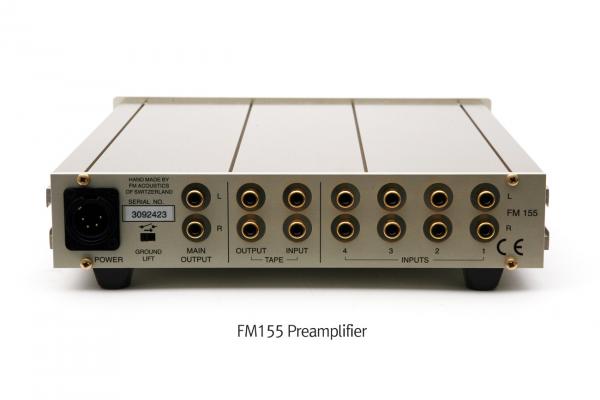
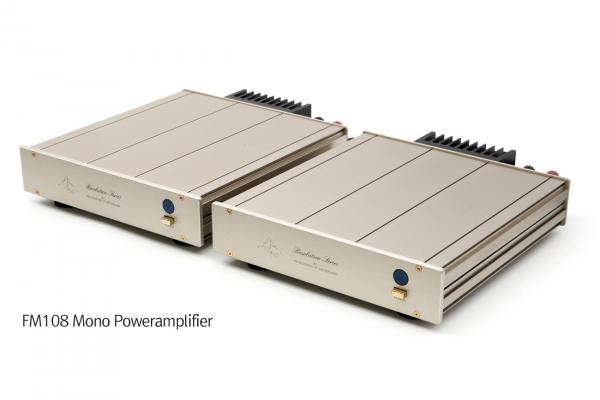
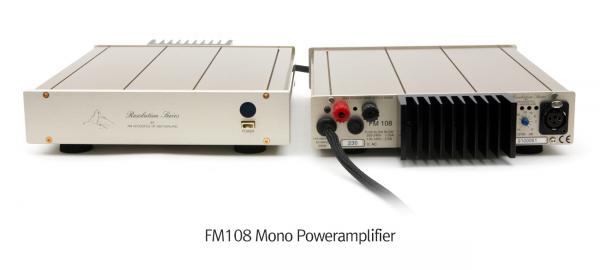
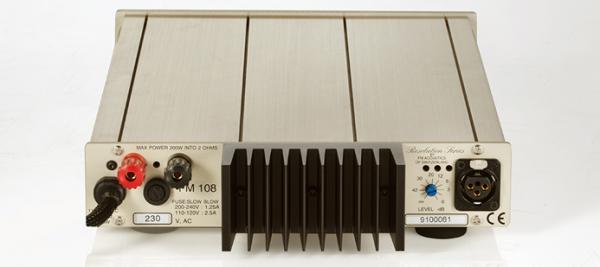
Zanimivo , da specifikacije "mono blokov" govorijo o A klasi / 70W(8ohms), 130W(4ohms), 200W(2ohms)  , samo ne vem od kje se ta moč vzame, glede na velikost "bonboniere" , samo ne vem od kje se ta moč vzame, glede na velikost "bonboniere"
_________________
~ ** ~ |
|
| Nazaj na vrh |
  Telefon: - Telefon: - |
|
|
kraljmatjaz

Pridružen/-a: Čet Maj 2008 21:27
Prispevkov: 1028
Kraj: Gorica
|
| Objavljeno: Sre Mar 26, 2014 21:06 Naslov sporočila: |
|
|
Saj nikjer ne piše 70W v A klasi...
_________________
Chi suona, stona. Chi non suona, critica! (R.Muti) |
|
| Nazaj na vrh |
|
|
|
|
Ne, ne moreš dodajati novih tem v tem forumu
Ne, ne moreš odgovarjati na teme v tem forumu
Ne, ne moreš urejati svojih prispevkov v tem forumu
Ne, ne moreš brisati svojih prispevkov v tem forumu
Ne ne moreš glasovati v anketi v tem forumu
|
Powered by phpBB © 2001, 2005 phpBB Group
|
|
 Pomoč pogostih vprašanj
  Išči
Išči  Seznam članov
  Skupine uporabnikov
 Registriraj se
 Tvoj profil
  Prijava za pregled zasebnih sporočil
  Prijava

